More than a year after leaving OpenAI to start her own lab, Mira Murati has finally shipped a product the public can actually touch. On July 15, 2026, Thinking Machines Lab released Inkling, an open-weight foundation model that anyone can download, inspect, and customize. It's a notable debut for a company that raised billions before putting out a single model, and it lands at a moment when the US is widely seen as trailing China in freely available AI. Here's what Inkling actually is, how it stacks up, and why Murati's approach to building it looks different from the rest of the field.
Who Is Mira Murati and What Is Thinking Machines Lab?
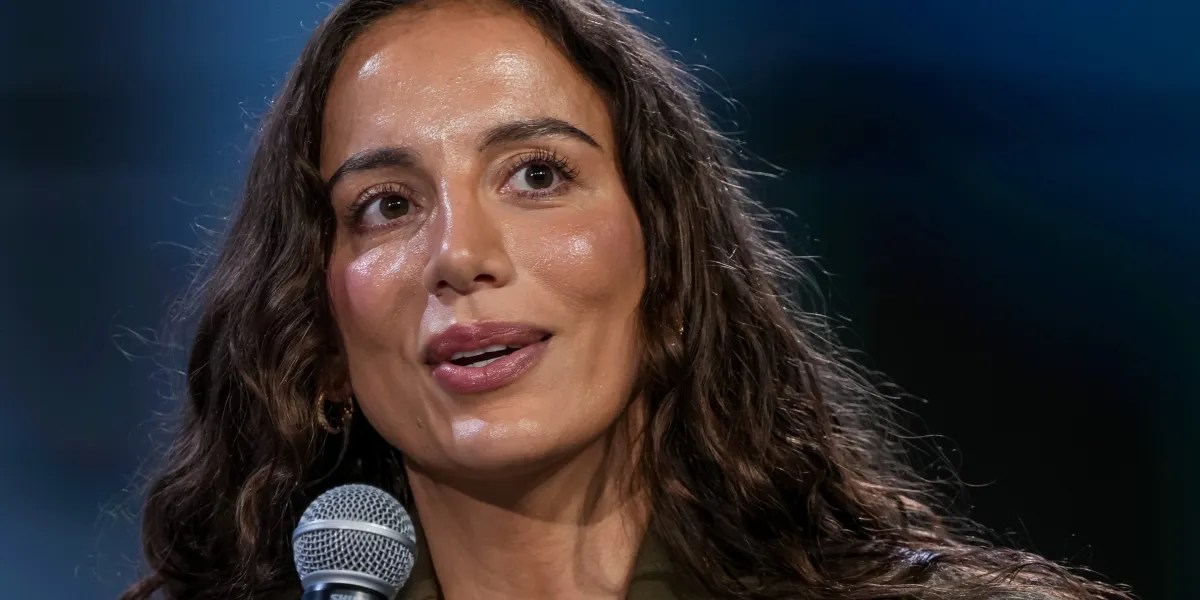
Mira Murati previously served as Chief Technology Officer at OpenAI, where she was involved in shipping some of the company's most widely used products. She founded Thinking Machines Lab in February 2025 alongside a group of fellow former OpenAI employees, positioning the startup as one of several new "AI neolabs" trying to compete with established players like OpenAI and Anthropic.
The company describes its mission as building AI that extends human judgment and will, with a particular emphasis on collaboration rather than full autonomy. Its founding team has ties to some of the most recognizable AI products and open-source projects of the last decade, including ChatGPT, Character.ai, the Mistral models, PyTorch, OpenAI Gym, Fairseq, and Segment Anything.
Thinking Machines raised $2 billion at a $12 billion valuation in its first year and was reportedly in talks for a much larger follow-on round. That kind of funding arrived well before the company had shipped a public model, a pattern shared by several of its AI-lab peers. It hasn't all been smooth sailing, either — a number of employees have since departed for companies including Meta and OpenAI.
Before Inkling, Thinking Machines' main revenue driver was Tinker, a developer platform for fine-tuning AI models. Tinker already counts serious customers, including the hedge fund Bridgewater Associates, which has used it to adapt models for financial tasks.
Meet Inkling: Thinking Machines' First Model
Inkling is a Mixture-of-Experts transformer with 975 billion total parameters, of which 41 billion are active for any given query. It supports a context window of up to 1 million tokens and was pretrained on roughly 45 trillion tokens spanning text, images, audio, and video. Unlike a closed model accessed only through an API, Inkling is open-weight: developers can download the full set of trained parameters and adapt the model to their own needs, though the underlying training data and source code stay private.
Thinking Machines has been candid that Inkling isn't trying to top the leaderboard. The company frames it as a broad, balanced foundation model rather than the single strongest system available, open or closed. The pitch instead centers on flexibility: strong multimodal reasoning, efficient and adjustable "thinking effort," and native availability on Tinker for fine-tuning.
Alongside the full-size model, Thinking Machines is previewing Inkling-Small, a lighter 276-billion-parameter version with 12 billion active parameters, built for use cases where latency and cost matter more than squeezing out maximum benchmark scores.
What Can Inkling Actually Do?
Controllable thinking effort
One of Inkling's defining features is a dial that lets developers trade off reasoning depth against cost and speed. Rather than a fixed amount of computation per query, Inkling can be tuned to spend more or fewer tokens thinking through a problem, which matters a great deal for products that call a model millions of times or need low latency for real-time collaboration.
Native multimodality
Inkling was trained from the ground up to reason over text, images, and audio rather than bolting vision or speech onto a text-only base. That design choice supports Thinking Machines' broader goal of building "interaction models" — systems meant to pick up on the richer, less verbal signals present in real conversation, such as pauses, tone, or interruptions.
Agentic coding and tool use
The model was trained to operate inside coding agents and tool-use harnesses, with the toolsets and schemas randomized during training so it doesn't overfit to any single setup. Thinking Machines has demoed Inkling one-shotting web apps, generating cohesively styled multi-page documents, and iteratively refining a multiplayer game over dozens of rounds of automated feedback.
Calibration and safety
Thinking Machines also trained Inkling for what it calls "epistemics" — giving calibrated, appropriately hedged answers rather than confident-sounding guesses, and resisting pressure to avoid answering sensitive but legitimate questions. On the safety side, the model was evaluated internally and by external testers on dangerous-capability and human-harm benchmarks, with Thinking Machines reporting strong refusal rates on adversarial safety tests relative to other open-weight models.
How Does Inkling Compare to Other Models?
Thinking Machines has published extensive benchmark comparisons against other open-weight models like GLM, Kimi, Nemotron, and DeepSeek, as well as closed models such as Gemini, GPT, and Claude. Broadly, Inkling performs competitively among open-weight systems on reasoning, coding, and multimodal tasks, while trailing the very top closed frontier models on several benchmarks. Its more distinctive claim is efficiency: on tasks like Terminal Bench 2.1, Thinking Machines says Inkling reaches comparable scores to some rivals while generating a fraction of the tokens, which translates into lower real-world cost per query.
| Attribute | Inkling |
|---|---|
| Total / active parameters | 975B / 41B |
| Context window | Up to 1M tokens |
| Pretraining data | ~45 trillion tokens (text, image, audio, video) |
| Release date | July 15, 2026 |
| License model | Open weights |
| Smaller variant | Inkling-Small (276B total / 12B active, preview) |
Where and How to Access Inkling
Inkling is available for fine-tuning on Tinker starting at launch, with context length options of 64K and 256K tokens and a temporary 50% pricing discount. Thinking Machines has also opened an "Inkling Playground" inside the Tinker console so developers can chat with the model before committing to a training run.
For teams that want to deploy fine-tuned checkpoints, Thinking Machines has lined up hosting partners including TogetherAI, Fireworks, Modal, Databricks, and Baseten, alongside inference-engine support through projects like SGLang, vLLM, and llama.cpp. The full model weights are published on Hugging Face, both in their original form and as an NVFP4 checkpoint optimized for newer NVIDIA hardware.
Why This Launch Matters
Inkling arrives at a moment when open-weight AI has become a bit of a strategic sore spot for the US industry. Meta, once the loudest champion of open models, has been shifting its focus toward proprietary systems it can monetize directly. OpenAI's open releases have remained a side note next to its paid products. That's left a gap that Chinese labs have increasingly filled with freely downloadable, competitive models — something that's started to raise national conversations about AI dependence as usage costs climb.
Thinking Machines isn't trying to monetize Inkling directly; its business model still runs through Tinker. But by putting a capable, genuinely open model into developers' hands, the release doubles as a statement about where Murati thinks the frontier of "useful AI" actually is — not just raw benchmark supremacy, but a model flexible enough to be reshaped for whatever a given team or product actually needs.
Inkling is Thinking Machines Lab's first public model, but the company has signaled it's the start of a family it plans to keep building on — including the previewed Inkling-Small and the broader "interaction models" work aimed at more natural, real-time human-AI collaboration.